Most modern diesel engines are equipped with a DPF / FAP / GPF soot filter in the exhaust system. Its purpose is to reduce the amount of diesel particulate matter — soot — released into the environment, often by up to 95%.
During the combustion process, soot accumulates inside the DPF. During regeneration, this soot is burned at high temperature and converted into ash. This reduces harmful particulate emissions and also helps reduce the unpleasant smell typical of older diesel vehicles.
Because of their construction and because of many external factors, DPF filters gradually lose efficiency over time. This is especially common after 150,000–200,000 km. At that point the filter may start collecting more soot or ash than the system can safely manage.
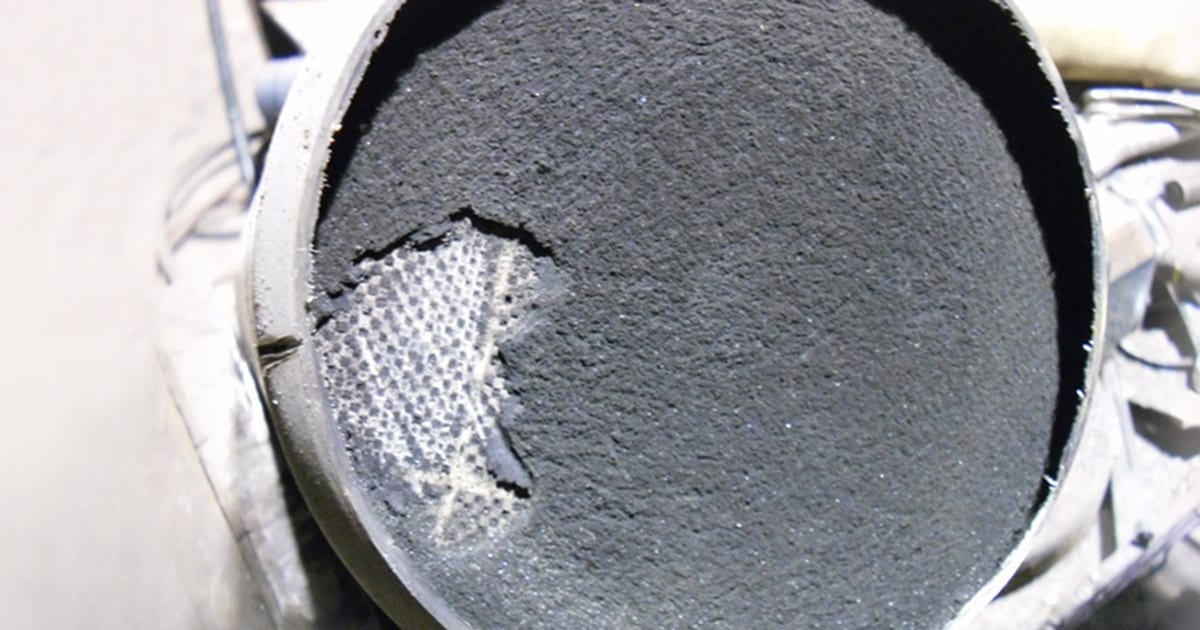
The most common causes of DPF / FAP / GPF filter problems are:
As the soot filter becomes blocked, exhaust backpressure increases. This can lead to higher fuel consumption, reduced engine power and, in some cases, an increased engine oil level when fuel intended for regeneration enters the engine oil. This is harmful because the oil loses lubrication quality and the total oil level becomes too high.
When forced DPF regeneration using diagnostic equipment is no longer enough, we use plan B: removing the DPF and washing it in a dedicated machine using special cleaning fluid and compressed air.
Main steps of DPF soot filter washing:
After successful DPF soot filter washing, we usually achieve:
The most reliable way to keep a soot filter healthy is to allow it to regenerate properly. More information about maintaining a healthy DPF filter can be found here:
https://galingas.lt/blogas/kaip-issaugoti-dpf-filtra/
Passive DPF regeneration happens when the vehicle is driven at a stable speed for a longer period of time. The engine ECU monitors the condition of the DPF and, when regeneration is required, raises the exhaust temperature to the level needed for soot burn-off — usually around 550–680 °C.
In practice, this means that when driving on a motorway or open road, it is useful to maintain a steady speed without stopping for at least 30–50 minutes. This gives the filter a realistic chance to regenerate properly. Not every driver knows this, which is why manufacturers also use another automatic regeneration strategy.
Active DPF regeneration is an automatic forced process where additional fuel is injected after the main combustion event — usually called post-injection. This happens when the calculated DPF soot load reaches a certain threshold, often around 45%, although the mathematical calculation of soot load is not always accurate.
The purpose of post-injection is to increase exhaust temperature enough to attempt a regeneration. Why “attempt”? Because many vehicles are switched off shortly after reaching the destination, often after a very short journey. In that case the regeneration is interrupted and postponed until the next suitable opportunity.
Many vehicles display a warning on the dashboard when the soot load becomes too high. In that situation, we do not recommend immediately switching the engine off and rushing to a workshop. If conditions allow, keep the engine running and drive at a steady speed, preferably at least 80 km/h, for 15–40 minutes while maintaining a reasonable engine load.

How to recognise active DPF regeneration?
If the DPF is causing problems on a VAG vehicle — Volkswagen, Audi, Seat or Škoda — produced between 2008 and 2015, it is worth checking whether harmful Dieselgate software is interfering with the regeneration process:
https://en.galingas.lt/blog/hidden-side-of-dieselgate-engine-problems/
For more information or to book a visit, please contact us through the usual contact channels.


